20 Multi-Kitten Coordination
Multi-Agent Systems, Cooperation, Competition, and Emergence
🐾 Evergreen Chapter: Core mathematics and theory do not expire. Last verified: 2026-11-26
Prerequisites: Chapter 19
Technical Keywords: Multi-Agent Systems (MAS), Multi-Agent Reinforcement Learning (MARL), Zero-Sum Games, Cooperation, Competition, Nash Equilibrium, Emergent Behavior
Up until now, Pixel has been alone. He explores the living room, fights the vacuum cleaner, and maximizes his own treats.
But what happens when you introduce a second kitten, Luna, into the living room? Suddenly, the environment is no longer static. When Pixel takes an action (jumping for the toy), it directly impacts Luna’s state and reward—and from Pixel’s perspective, the effective environment dynamics keep shifting as Luna updates her policy because the environment is learning and fighting back.
Welcome to Multi-Agent Systems (MAS).
20.1 Competition: The Zero-Sum Game
If there is only one treat on the floor, Pixel and Luna are playing a Zero-Sum Game—a game where all agents’ payoffs sum to zero, so one agent’s gain equals the other’s loss (if Pixel gets +1, Luna gets -1).
If we train them using Multi-Agent Reinforcement Learning (MARL), an arms race begins. 1. Pixel learns to sprint to the treat. 2. Luna updates her policy to trip Pixel. 3. Pixel updates his policy to jump over Luna’s paw. 4. Luna updates her policy to fake a swipe and then block his landing.
Through pure self-play, they force each other to become absolute masters of the game. This is exactly how DeepMind’s AlphaGo became the world champion at the board game Go—it played millions of games against itself, continuously improving its own opponent.
Eventually, they might reach a Nash Equilibrium—a state where neither kitten can improve their strategy any further without making themselves worse off, assuming the other kitten plays perfectly.
20.2 Cooperation: Moving the Heavy Box
What if the humans put 10 treats inside a heavy cardboard box? Pixel cannot open it alone. Luna cannot open it alone. They must push it together.
This is a Cooperative Game. They share the exact same Reward Function.
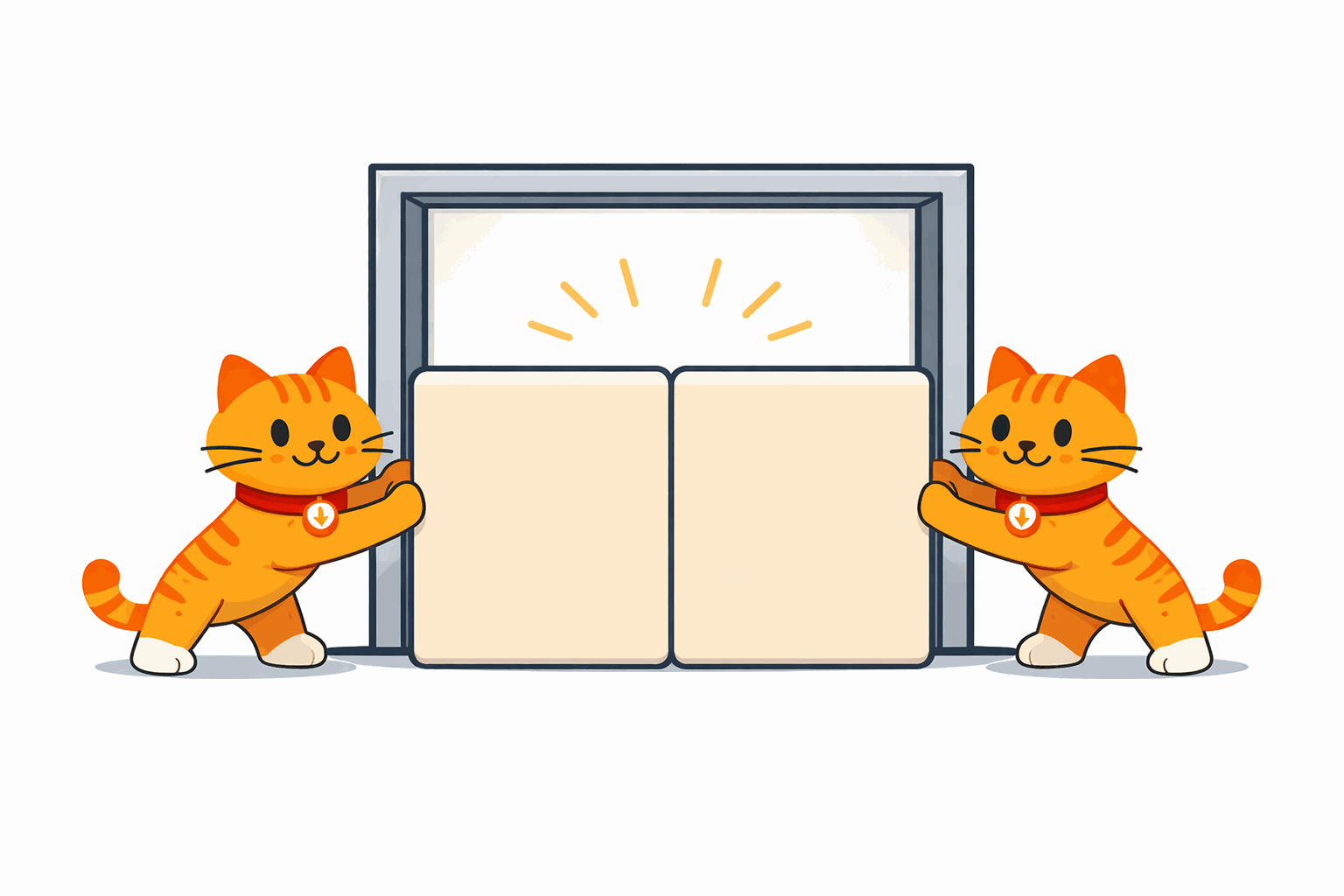
But coordination is incredibly hard for AI. If Pixel pushes the box, but Luna decides to take a nap, the box doesn’t move. Pixel gets 0 reward. Pixel’s neural network learns: “Pushing the box is useless.” It unlearns the behavior.
To solve this, MARL uses Centralized Training, Decentralized Execution (CTDE). During training (in the simulator), an invisible “God” algorithm watches both kittens, sees their hidden states, and coordinates their math so they learn to trust each other. But when deployed in the real world, the “God” algorithm is removed, and the kittens act independently, using the cooperative policies they learned.
20.3 Emergent Behavior: The Rules We Didn’t Write
The most fascinating part of Multi-Agent Systems is Emergent Behavior.
Researchers at OpenAI created a simple game of Hide and Seek with MARL agents in a physics simulator (Baker et al., 2020).
- They gave the Hiders points for staying hidden.
- They gave the Seekers points for finding them.
- They gave the agents the ability to push boxes around.
The researchers never programmed the agents to build forts. But over millions of episodes: 1. The Hiders naturally learned to push boxes into doorways to build impenetrable forts. 2. The Seekers realized they could drag ramps over to the walls and jump into the forts. 3. The Hiders realized they could steal the ramps and lock them inside the fort before the Seekers could use them.
Complex, highly intelligent strategies emerged organically from simple math and competition.
Rosetta Stone
| Kitten World | Math/Concept | The Result |
|---|---|---|
| “Arms race for the toy” | Zero-Sum Game / Competing Agents | Self-play drives rapid agent improvement. |
| “Perfect stalemate” | Nash Equilibrium | No agent can improve by changing strategy unilaterally. |
| “Moving the heavy box” | Cooperative Game / CTDE | Agents learn to collaborate via centralized training but execute decentralized. |
| “Building forts out of boxes” | Emergent Behavior | Complex strategies arise naturally from simple reward optimization. |
20.4 Managed Multi-Agent Engineering Teams (Late 2026) 🧭
The coordination principles above are no longer confined to game simulators. By late 2026, production AI systems shifted from single-agent tool loops to long-horizon multi-agent engineering teams—managed runtimes that coordinate dozens or hundreds of specialized subagents across multi-day inspect-test-revise workflows.
In these architectures, a coordinator decomposes a large software or research objective into bounded subtasks, dispatches parallel subagents into isolated sandboxes, and reconciles their outputs through automated test suites and verification gates. The exact challenges of MARL reappear in engineering form: avoiding conflicting edits to shared state (non-stationarity), synchronizing partial observations, and preventing cascading errors across long horizons. We return to the cloud infrastructure that runs these persistent agent fleets in Chapter 26.
20.5 Removing the Training Wheels
The Real Engineering
We used competing kittens to explain Multi-Agent Systems. In MARL, environments become non-stationary from each agent’s perspective because other agents are simultaneously updating their policies while learning, shifting the effective transition and reward dynamics. In a Zero-Sum game (where payoffs sum to zero), agents optimize against each other via Self-Play, ideally converging to a Nash Equilibrium where no agent can unilaterally improve. In cooperative settings, Centralized Training with Decentralized Execution (CTDE) allows agents to share gradients and value functions during training, but act strictly on local observations during inference.
20.6 Paws and Reflect: Chapter 20 Quiz
1. You train two trading bots in a closed market where every dollar Bot A gains is an exact equal-and-opposite dollar lost by Bot B (their payoffs always sum to zero). What kind of game is this?
A Zero-Sum game (Competition).2. Why is it difficult for two RL agents to learn to cooperate if they only learn from their own individual trial and error?
Because an action that requires cooperation (like pushing a heavy box) yields zero reward if the other agent doesn’t also do it. If both agents are exploring randomly, the odds of them both pushing the box at the exact same millisecond are near zero. They will assume the box is unmovable.3. In the Hide and Seek example, did the human engineers program the “Ramp Stealing” algorithm?
No! Emergent behavior means the agents discovered “Ramp Stealing” entirely on their own as a mathematically optimal way to maximize their Reward Function against an evolving adversary.20.7 Chapter 20 Summary
You’ve learned what happens when multiple brains interact:
- Multi-Agent Systems: Environments where the actions of one agent change the physics/rewards of another.
- Zero-Sum Games: Pure competition, driving rapid improvement through arms races (Self-Play).
- Nash Equilibrium: The mathematical stalemate of perfect play.
- Cooperation: Agents sharing a reward, requiring complex training regimes (CTDE) to learn coordination.
- Emergent Behavior: Astounding, unprogrammed strategies that arise naturally from simple competitive rules.
AI Safety Thread: Chapter 20
Flash Crashes and Multi-Agent Chaos: What happens when thousands of independent AI agents are deployed into the real-world economy? In 2010, the US Stock Market experienced the “Trillion Dollar Flash Crash.” High-frequency algorithmic trading bots (simple multi-agent systems) began reacting to each other’s trades. Bot A sold, triggering Bot B to sell, which triggered Bot C. In 36 minutes, the Dow Jones plunged 1,000 points. When high-speed autonomous agents interact, they may create cascading failure loops that can outpace human oversight.
Next: Chapter 21: Rules for Humans & Kittens: Ethics, Governance, Bias, and Regulation